
How Sydney parents can protect their children from electrical hazards
Electricity powers our homes, but it can also pose serious risks, especially for young children who are naturally curious. Every year, children are injured due to preventable electrical hazards in the home.
- Childproof your power points: Install safety covers or upgrade to modern outlets to prevent children inserting objects into sockets.
- Keep cords and power boards out of reach: Secure cables, avoid overloading, and position electrical items away from children.
- Regularly check for damage: Faulty wires, exposed cables, or burnt outlets should be addressed immediately to prevent injury.
- Install safety switches (RCDs): These devices automatically cut power during faults, helping prevent serious electric shock.
- Be cautious around water: Keep appliances away from wet areas and never allow children to use electrical devices near water.
- Teach kids electrical safety: Simple rules like avoiding power points and cords can significantly reduce risks.
- Upgrade older electrical systems: Modern installations improve overall safety—especially in older Sydney homes.
As parents, creating a safe electrical environment is one of the most important steps you can take to protect your family.
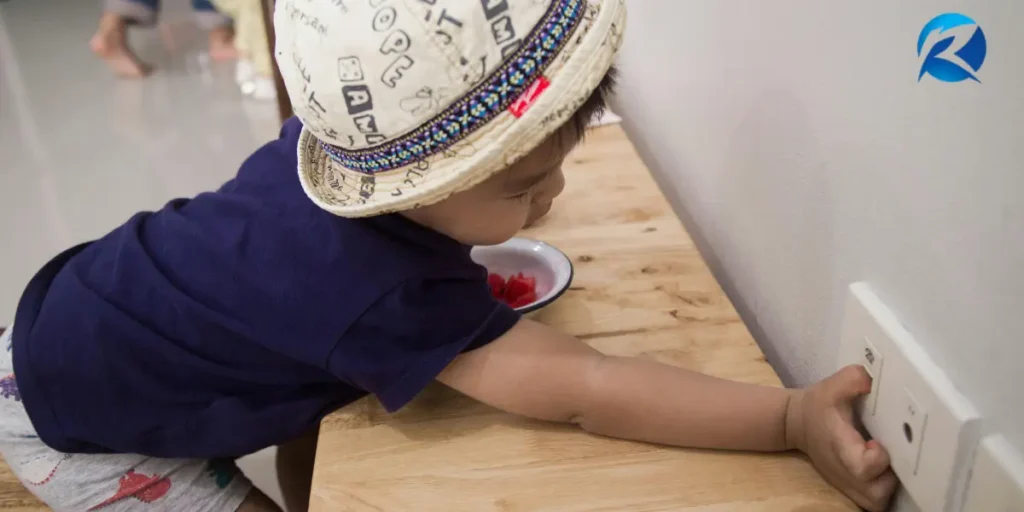
Childhood electrical injuries in Australia are often low-voltage, occurring mostly within the home. According to a study by the National Institutes of Health, over half of child electrical injuries are caused by <100 V sparks. Key dangers include faulty appliances and curiosity around wires. Household supply (230v) poses significant risks, particularly with wet appliances, and fatal electrical shocks are rare but serious.
In this guide, the team at Russo Electrical, your trusted Sydney electricians, explains how to make your home safer for children and prevent common electrical accidents.
Why Electrical Safety Matters for Children
Young children explore the world with their hands. Unfortunately, this curiosity often leads them toward power points, cords, appliances, and switches.
Common risks include:
- Inserting objects into power outlets
- Pulling on electrical cords
- Playing with appliances
- Contact with damaged wiring
- Climbing near electrical installations
Even a small electrical shock can cause burns, muscle damage, or serious injury.
The good news is that most electrical accidents at home are preventable with the right precautions.
1. Install Childproof Power Point Covers
One of the most common dangers for toddlers is inserting objects into power outlets.
Children often push items like:
- Keys
- Hairpins
- Toys
- Paperclips
into power points, which can cause severe electric shock.
Installing childproof outlet covers or safety plugs is a simple and inexpensive way to prevent this.
Modern homes in Sydney often use safety outlets with built-in shutters, which only open when a plug is inserted correctly.
If your home has older outlets, upgrading them can significantly improve safety.
2. Keep Power Boards and Extension Leads Out of Reach
Power boards are common in family homes, but they can become hazardous if children can access them.
Risks include:
- Pulling cords
- Overloading outlets
- Chewing or playing with cables
Safety tips include:
✔ Keep power boards behind furniture
✔ Use cable management to secure cords
✔ Avoid running extension leads across floors
✔ Install wall-mounted power boards where possible
If you rely heavily on power boards, it may be worth having a licensed electrician install additional power points.
3. Secure Loose Electrical Cables
Loose cables can quickly become a trip hazard or a curiosity for young children.
Kids often pull on cords connected to:
- kettles
- lamps
- televisions
- phone chargers
- hair appliances
This can cause appliances to fall or expose live wiring.
Parents should:
- Bundle cables neatly behind furniture
- Use cord clips or cable covers
- Avoid leaving charging cables plugged in unnecessarily
- Keep appliance cords away from bench edges
4. Check for Damaged Electrical Equipment
Damaged electrical cords are a serious hazard.
Signs to watch for include:
- Frayed wires
- Exposed copper
- Burn marks on outlets
- Loose plugs
- Flickering power
Children may unknowingly touch damaged cables or pull them apart while playing.
If you notice any damage, stop using the appliance immediately and have it repaired or replaced.
5. Install Safety Switches (RCDs)
A safety switch, also called an RCD (Residual Current Device), is one of the most important electrical safety devices in your home.
Safety switches work by automatically shutting off electricity when a fault is detected, preventing serious electric shock.
In NSW, safety switches are mandatory for new circuits, but many older homes still lack full protection.
Every home should have safety switches installed on:
- Power circuits
- Lighting circuits
- Outdoor circuits
If you’re unsure whether your home is protected, a qualified electrician can inspect your switchboard.
6. Be Careful With Electrical Appliances Around Water
Water and electricity are a dangerous combination.
Children are especially vulnerable in areas like:
- Bathrooms
- Kitchens
- Outdoor areas
- Swimming pools
Parents should ensure:
- Appliances are kept away from sinks and bathtubs
- Hair dryers and styling tools are unplugged after use
- Outdoor electrical equipment is weather protected
Never allow children to operate electrical appliances near water.
7. Teach Kids Basic Electrical Safety
As children grow older, it’s important to teach them safe habits around electricity.
Simple rules include:
- Never touch power points
- Don’t play with electrical cords
- Stay away from switchboards
- Never use appliances near water
These lessons help children understand that electricity is useful but dangerous if misused.
When to Call a Licensed Electrician
Some electrical safety improvements require professional installation.
You should consider contacting an electrician if you need:
- Additional power points installed
- Power point upgrades to modern safety outlets
- Switchboard upgrades
- Safety switch installation
- Electrical safety inspections
These upgrades not only protect children but improve the overall safety of your home.
Child Electrical Safety for Sydney Homes
Many homes across Sydney—particularly older properties—still have outdated electrical systems.
Upgrading your electrical installation can significantly reduce the risk of electrical accidents and ensure your home meets modern safety standards.
At Russo Electrical, we help Sydney families improve electrical safety with professional installations, inspections, and upgrades.
Need Help Making Your Home Safer?
If you’re concerned about electrical safety in your home, our licensed electricians can help.
Russo Electrical provides:
- Safety switch installation
- Power point upgrades
- Switchboard upgrades
- Electrical safety inspections
- General electrical maintenance
Contact Russo Electrical today to make your Sydney home safer for your family.
Child Electrical Safety at Home – FAQs
Why is electrical safety important for children?
Children are naturally curious and often explore with their hands, which puts them at risk around power points, cords, and appliances.
Even low-voltage shocks can cause burns, muscle damage, or serious injury, making prevention essential in every home.
How can I childproof power outlets at home?
Install childproof outlet covers or safety plugs to prevent children from inserting objects like keys, toys, or paperclips into power points.
Upgrading to modern outlets with built-in safety shutters also provides added protection.
Are power boards and extension leads dangerous for children?
Yes. Children may pull cords, chew cables, or overload outlets, which can lead to electrical hazards.
Keep power boards out of reach, secure cables, and consider installing additional power points if needed.
How do I safely manage loose electrical cables?
Loose cables can be a trip hazard and attract children’s attention.
Use cable clips, bundle cords behind furniture, and avoid leaving chargers plugged in when not in use. Keep cords away from edges where appliances could be pulled down.
What are the signs of damaged electrical equipment?
Look out for frayed wires, exposed copper, burn marks, loose plugs, or flickering power.
If you notice any of these signs, stop using the appliance immediately and have it repaired or replaced.
What is a safety switch (RCD) and why is it important?
A safety switch (Residual Current Device) automatically shuts off electricity when a fault is detected, helping prevent serious electric shock.
Every home should have safety switches installed on power, lighting, and outdoor circuits.
Why should electrical appliances be kept away from water?
Water and electricity are a dangerous combination, especially for children.
Keep appliances away from sinks, bathtubs, and outdoor wet areas, and always unplug devices like hair dryers after use.
How can I teach my children about electrical safety?
Teach simple rules such as not touching power points, avoiding electrical cords, and never using appliances near water.
Helping children understand the risks early builds safer habits as they grow.
When should I call a licensed electrician?
You should contact a licensed electrician for upgrades such as installing safety switches, adding power points, upgrading switchboards, or conducting safety inspections.
Professional work ensures your home meets safety standards and protects your family.