
Outdoor power makes a garden or alfresco area more practical. It allows you to run gardening tools, connect suitable entertaining equipment and use appliances without trailing a lead through the house.
But outdoor electricity needs careful planning. Rain, sprinklers, wet ground, garden maintenance and regular cleaning create conditions that indoor power points do not normally face.
For Putney homeowners, the priority is to have outlets suited to their location, appropriate circuit protection and safe arrangements for anything plugged into them. A covered patio alone does not establish that an ordinary indoor power point or power board is suitable outside.
Australian electrical safety guidance recommends weatherproof power points and switches where they may be exposed to the elements. It also advises using outdoor-rated power boards and leads, protecting connections from water and using circuits protected by safety switches.
The guiding principle is protection: protect the fitting from the conditions, the circuit from faults and the people using the space from electric shock.
Russo Electrical provides additional outlets, dedicated circuits, outdoor lighting, safety-switch testing and electrical fault finding across its Sydney service areas. These services can help homeowners plan safer power arrangements for gardens and outdoor entertaining spaces.
Why Outdoor Power Points Need Different Treatment
An outdoor outlet can be exposed to more than direct rainfall.
Water may reach electrical equipment through wind-driven rain, sprinklers, roof runoff or cleaning. Leads can also be damaged by garden tools or placed where people walk.
Queensland Electrical Safety Office guidance specifically warns about extension leads around electric mowers, line trimmers, hedging tools and other equipment that could accidentally cut or damage them. It recommends heavy-duty leads suitable for outdoor use and circuits protected by safety switches.
This makes outdoor safety a combination of:
1. Use Power Points Designed for Their Location
If a power point may be exposed to weather, have an electrician select a suitable weatherproof fitting.
Electrical Safety Office guidance recommends weatherproof power points and switches where exposure to the elements is likely. It also warns that outdoor power boards should be rated for outdoor use and protected from rain or sprinkler splash.
Does a roof make an ordinary outlet suitable?
Not automatically.
When planning an alfresco outlet, consider whether water can still reach it from the side, from cleaning or from nearby irrigation. Give the electrician a clear picture of how the space is used.
Useful information includes:
Read the product instructions
Outdoor fittings can have installation and use conditions. Ask how the outlet must be used when a plug is connected, whether covers need to close and what maintenance the manufacturer specifies.
Do not assume a weatherproof label means unrestricted exposure to water in every configuration.
2. Protect the Plug Connection, Not Just the Wall Outlet
A suitable outlet does not make every connected item suitable for outdoor use.
An indoor power board, an exposed extension-lead join or an appliance intended only for dry indoor conditions can undermine an otherwise appropriate installation.
Electrical safety guidance recommends keeping all outdoor connections weatherproof and suitable for their intended use. Energex also warns against exposing joins in extension leads to the weather.
Avoid improvised waterproofing
Do not rely on a plastic bag, tape or a household container as a substitute for an appropriate connection arrangement.
Instead, ask the electrician or equipment supplier what protection is required for the particular connection. Follow the manufacturer’s instructions for any purpose-made enclosure.
The aim is not simply to conceal the plug. It is to use equipment designed for the conditions.
Keep connections away from wet areas
Avoid placing leads, power boards or electrical appliances where water can reach them.
Australian government guidance warns against using portable appliances, power tools or extension leads in water or rain. Outdoor suitability does not remove the need to keep the equipment within its permitted operating conditions.
3. Confirm Safety-Switch Protection
A safety switch, also called a residual current device or RCD, helps protect people from severe electric shock. It detects current leakage and disconnects the circuit rapidly.
This protection is particularly important when electrical equipment is used outdoors. Electrical Safety Office guidance advises always using a circuit with a safety switch for outdoor equipment.
A circuit breaker is not the same thing
NSW Government guidance distinguishes the devices:
| Device | Main purpose |
|---|---|
| Safety switch or RCD | Helps protect people from severe electric shock |
| Circuit breaker | Protects household circuitry and wiring |
Some devices combine these functions. If you are unsure what is installed, ask an electrician rather than assuming every switch offers the same protection.
One safety switch may not cover every outlet
A safety switch protects only the circuits connected through it.
NSW notes that older houses may have one safety switch protecting several circuits and recommends asking a licensed electrician whether the home has appropriate coverage.
When arranging outdoor work, ask specifically whether the proposed power points will be protected.
4. Test Safety Switches Regularly
NSW recommends testing household safety switches twice a year.
For safely accessible equipment, follow the manufacturer’s instructions and government guidance. Notify everyone in the house before testing because the relevant circuits should lose power.
NSW’s procedure includes pressing the test button, confirming that power is disconnected on the relevant circuits and then resetting the device. If the test fails or the switch does not reset, contact a licensed electrician.
Do not remove switchboard covers or approach wet or damaged equipment.
A successful test is useful, but it does not replace inspection of a damaged outlet, lead or appliance.
5. Use Extension Leads as a Temporary Arrangement
An extension lead can be useful for a gardening task, but it needs to suit the equipment and conditions.
Electrical Safety Office guidance recommends heavy-duty leads outdoors and warns users to remain aware of their position when operating cutting tools.
Before use, check the manufacturer’s instructions and inspect the lead for visible damage. Do not use a damaged lead or attempt to make one yourself.
Plan the route before starting
Keep the lead away from:
If a lead is always needed, discuss a permanent outlet
If you regularly run power through a doorway or across the patio, ask an electrician whether a suitably positioned outdoor outlet would be more practical.
Russo Electrical provides additional outlets, dedicated circuits and circuit alterations for changing household needs. The right solution should consider both the outlet’s position and the circuit supplying it.
6. Do Not Assume an Outdoor Power Board Is Suitable for Every Appliance
An outdoor-rated power board is not permission to connect an unlimited number of devices.
Follow the ratings and instructions for the board, lead and connected appliances. If several appliances are regularly used together, discuss the arrangement with an electrician before adding more outlets or adaptors.
A circuit assessment may be needed to determine whether the existing supply is appropriate or whether a dedicated circuit is required. Russo Electrical offers dedicated circuits and testing for appliances and household upgrades.
Think about the whole alfresco setup
List what you intend to use, such as:
7. Plan Around Irrigation, Drainage and Cleaning
A garden changes over time. New planting, raised beds, irrigation changes and altered paving can affect the conditions around an existing outlet.
Include electrical fittings when reviewing the outdoor layout.
Ask:
Do not hose electrical fittings
Follow the manufacturer’s cleaning instructions. Do not assume that a weatherproof fitting can be pressure-washed or deliberately saturated.
If cleaning regularly puts electrical equipment at risk of getting wet, discuss the arrangement with an electrician.
8. Give Pools and Other Wet Areas Separate Attention
Do not treat an outdoor kitchen, pool area or garden water feature as interchangeable locations.
Electrical safety guidance warns against using extension leads or power leads near outdoor wet areas unless they are specifically designed for external use. It also advises against operating portable equipment in water or rain.
That does not establish that any outdoor-rated item can be positioned anywhere near a pool.
For proposed outlets or equipment near a pool, spa or water feature, have an electrician assess the location and applicable installation requirements. Do not choose a distance or fitting based on a generic online rule.
9. Inspect Visible Fittings Without Opening Them
A homeowner’s check should remain visual.
Look for:
10. Take Wet-Weather Tripping Seriously
If power trips during or after rain, do not assume the protective device is faulty.
Tell the electrician what happened, including:
What should you do with wet equipment?
Keep clear. Do not touch wet plugs, outlets or appliances, and do not approach a switchboard if doing so is unsafe.
If there is smoke or fire, leave the affected area and call 000.
For an electrical fault without an active fire, seek professional advice and describe the water exposure clearly.
11. Use Licensed Professionals for Permanent Outdoor Power
Installing a new power point, relocating an outlet or altering a circuit is electrical installation work.
NSW Government guidance states that electrical installation work must be carried out by a licensed electrician. DIY electrical work can expose occupants to injury or death, cause fire and affect insurance.
Before agreeing to work:
Outdoor Power Point Safety Checklist
| Item | What to confirm |
|---|---|
| Outlet suitability | The fitting is appropriate for its location and exposure |
| Plug connections | Connections are protected as required, not left in water |
| Safety switches | The relevant circuit has appropriate protection |
| Testing | Household safety switches are tested every six months |
| Extension leads | Leads are suitable for outdoor use and the task |
| Cable routing | Leads are clear of cutting tools, vehicles and wet areas |
| Power boards | Any board used outside is rated for that use |
| Appliance loads | Ratings and circuit requirements have been considered |
| Visible condition | Damaged fittings and leads are taken out of use |
| Permanent work | Installation and repairs are handled by a licensed electrician |
These points draw on NSW electrical safety guidance and Australian outdoor-equipment advice. They are not a substitute for assessment of the actual installation.
How Russo Electrical Can Help Putney Homeowners
For local installation and maintenance services, visit our Putney electrician page.
For a garden or alfresco upgrade, the most useful starting point is a description of what you want to power and where.
Russo Electrical provides:
Send the team your suburb, photos of the proposed locations and details of any existing problems. Explain whether the work is a new installation, replacement of damaged equipment or investigation of a fault.
Russo Electrical’s published process involves reviewing the information, arranging an inspection where necessary, explaining the recommended scope and completing and testing the agreed work.
Confirm service availability for your Putney address, current charges and what is included before booking.
Nearby Outdoor Electrical Projects
These completed projects are in nearby suburbs, not Putney. They illustrate weatherproof power points and outdoor lighting work.
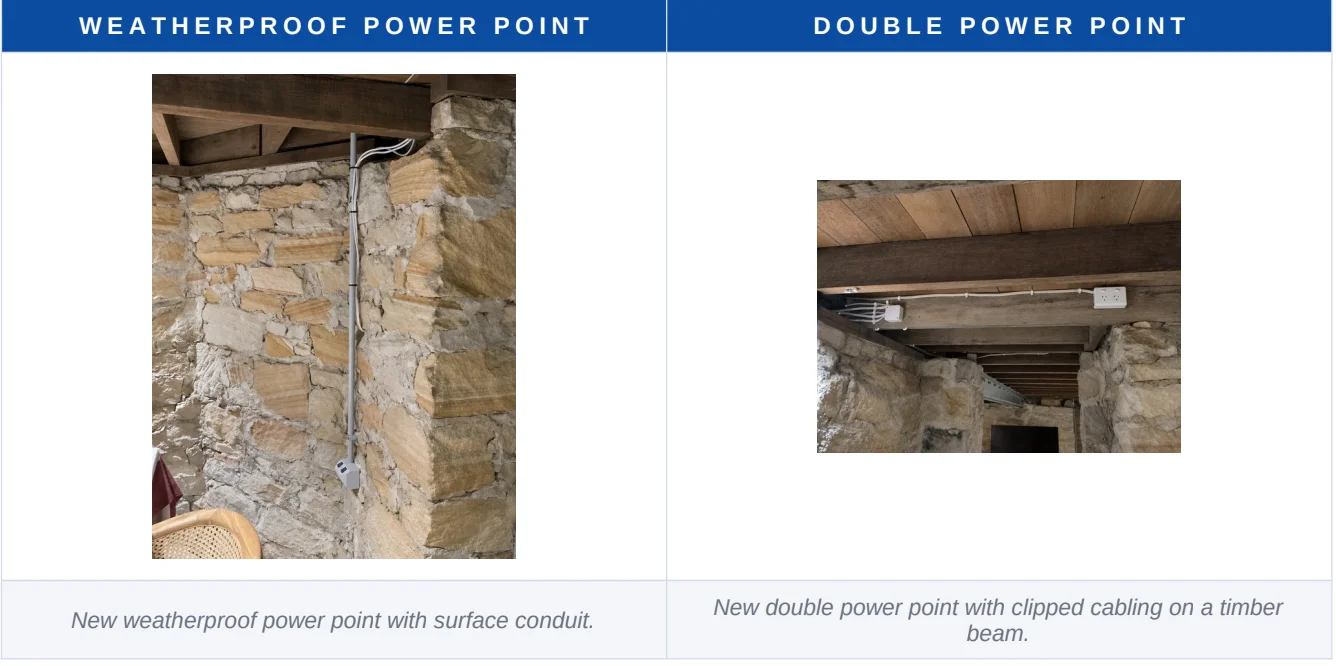 Nearby completed projectWeatherproof Power Points in WoolwichThe basement work included three weatherproof power points, five double power points and new cabling in surface conduit.View the project →
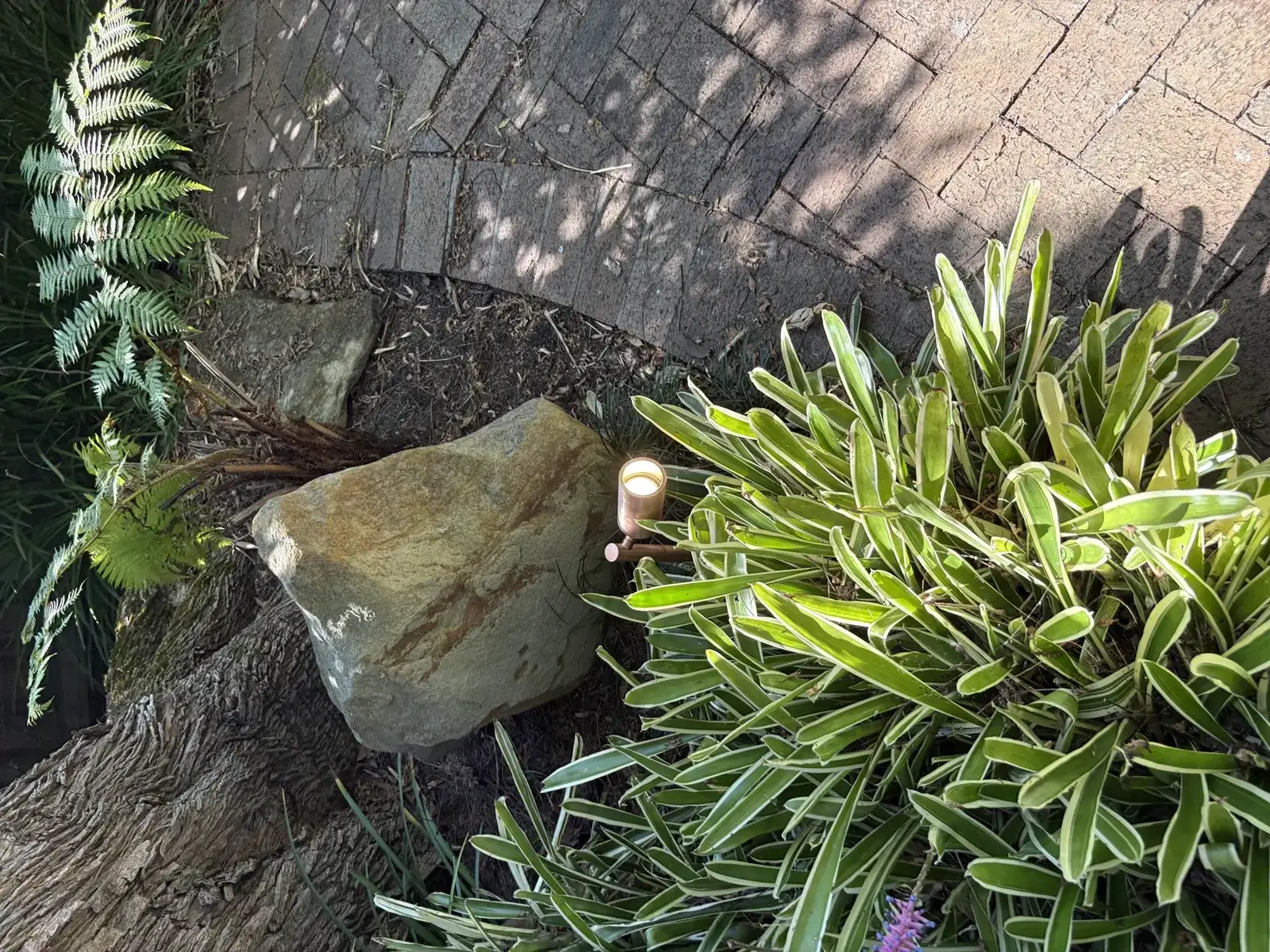 Nearby completed projectGarden and Outdoor Lighting in GladesvilleAn example of professionally installed garden lighting for outdoor spaces.View the project →
Frequently Asked Questions
Can I use an indoor power board on a covered patio?
Do not assume it is suitable. Electrical Safety Office guidance recommends using power boards rated for outdoor use and protecting them from weather and splashing water.
Does a weatherproof power point mean the plug connection can get wet?
No. The complete connection arrangement needs to be suitable for its intended use. Outdoor connections should be protected from weather as required, and leads and appliances should be kept out of water.
Do outdoor tools need safety-switch protection?
Electrical Safety Office guidance recommends always using a circuit with a safety switch for outdoor equipment. Ask an electrician to confirm the protection serving your outlets.
How often should I test safety switches?
NSW recommends twice a year. Follow the instructions and contact an electrician if testing fails or the switch does not reset.
Can I replace a broken outdoor outlet myself?
Not unless appropriately qualified. NSW prohibits unqualified people from installing, replacing or moving power points.
Why does the power trip when it rains?
The cause requires investigation. Describe the pattern and any affected outdoor equipment, but do not assume a particular fitting is responsible or repeatedly reset a switch that will not stay on.
Can Russo Electrical install more outdoor power points?
Russo Electrical offers additional outlets, dedicated circuits and circuit alterations. Provide the location and intended use so the team can assess the appropriate scope.
Make Outdoor Power Part of the Garden Plan
A safer outdoor electrical setup starts before the outlet is installed.
Choose fittings for the conditions, plan around water and garden maintenance, protect connections and confirm safety-switch coverage. Where extension leads have become a permanent workaround, discuss a better-positioned outlet and suitable circuit arrangement with an electrician.
Russo Electrical offers outdoor lighting, power points, circuit work and electrical safety services. A clear brief about your Putney garden or alfresco area helps the team recommend work suited to how you actually use the space.
Electrical Safety and Local Resources
NSW Government: Electrical safety in the home
For additional practical guidance, consult the Queensland Electrical Safety Office and Energex information on outdoor equipment, leads and wet-weather precautions. Advice from outside NSW is general safety guidance, not a statement of NSW installation law.
Explore our Putney electrician services and completed residential electrical projects.